Leave Your Message

2026 How to Choose the Best Auto Car for Global Trade?

Choosing the right Auto Car for global trade is crucial for success. The automotive market is vast and constantly evolving. It demands a keen understanding of trends and regulations. Many businesses face challenges in selecting cars that meet diverse market needs.

Understanding your target audience is essential. Different regions have varying preferences and requirements. Some areas prioritize fuel efficiency, while others focus on luxury features. Your choice must align with these factors to ensure market acceptance.

Furthermore, staying informed about international standards is vital. Compliance with regulations can affect your business reputation. A well-chosen Auto Car can enhance your global reach and profitability. Engaging with industry experts and conducting market research will improve your decision-making process. Reflect on past choices to refine your strategy and enhance future outcomes.

2026 How to Choose the Best Auto Car for Global Trade?

Understanding Global Trade Trends in the Auto Industry

The global auto industry is undergoing significant transformations. Trends indicate a shift towards electric and hybrid vehicles, driven by environmental concerns and government regulations. Countries are implementing stricter emissions standards. This trend shows no signs of slowing down.

Consumer preferences are also changing. Buyers increasingly favor fuel efficiency and sustainability. In many markets, the demand for electric cars outpaces supply. This presents both opportunities and challenges for manufacturers. Supply chain issues can arise from a sudden surge in demand. Companies must adapt rapidly to these changing dynamics.

Understanding global trade trends is critical for stakeholders. Experts suggest that businesses invest in market research. Building relationships with international suppliers can mitigate risks. A thorough analysis of regional regulations is essential. Knowledge of consumer behavior trends can guide production strategies. However, staying current can be difficult amid rapid change. Organizations must remain flexible to thrive.


Global Trade Trends in the Auto Industry (2026)

Key Considerations for Choosing Auto Cars for Export

2026 How to Choose the Best Auto Car for Global Trade?

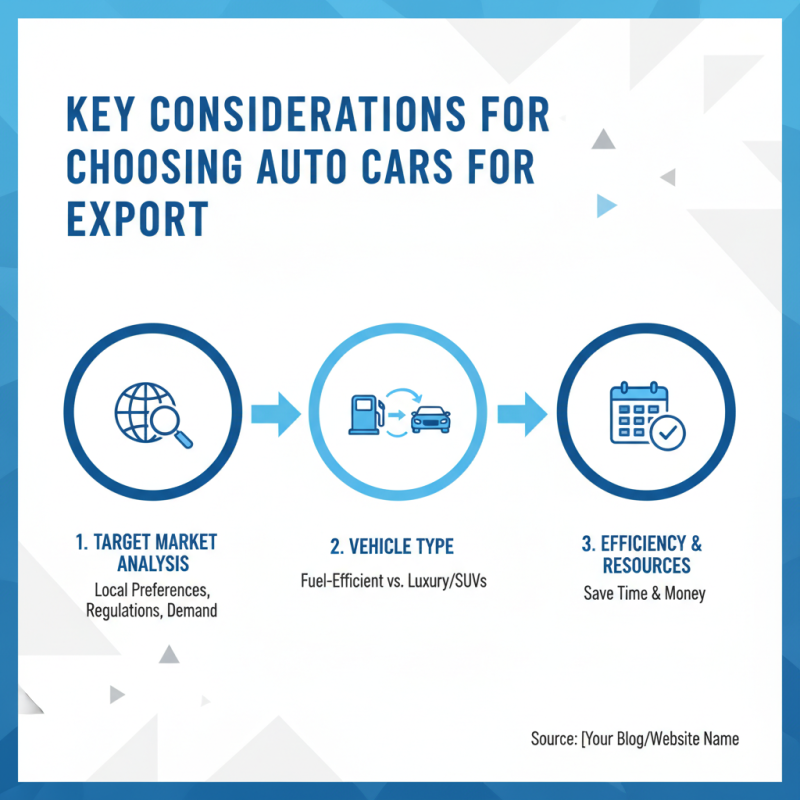
When selecting the best auto car for global trade, several key considerations come into play. Understanding the target market is crucial. Different regions have unique demands, influenced by local preferences and regulations. Some markets favor fuel-efficient vehicles, while others may seek luxury options. Researching these trends can save time and resources later.

Tip: Analyze local vehicle regulations. Knowing emission standards, safety requirements, and import tariffs can significantly affect your choice. Ensure compliance to avoid costly penalties.

Quality and reliability are non-negotiable aspects. Cars with a strong reputation for durability often fare better in international markets. Buyers are less likely to invest in brands known for frequent repairs. This aspect brings you to reassess potential options regularly.

Tip: Consider conducting surveys or interviews with importers. Gathering insights on vehicle performance can help refine your selection criteria. Emphasizing real-world feedback can illuminate issues that specifications alone do not reveal.

Evaluating Market Demand and Consumer Preferences

Evaluating market demand is essential when choosing an auto car for global trade. The automotive industry is projected to reach $3 trillion by 2026, with demand driven by electrification and sustainability. Consumer preferences are shifting toward eco-friendly vehicles. Reports indicate that 60% of consumers prefer vehicles with lower emissions. This preference can influence production strategies significantly.

Understanding regional market demands is crucial. For example, in the Asia-Pacific region, demand for electric vehicles (EVs) has surged. A recent study by the International Energy Agency showed that global EV sales doubled in 2021. This trend reflects changing consumer attitudes. However, not all regions share the same enthusiasm for EVs. Some markets still prioritize affordability and performance over sustainability.

Consumer feedback plays a vital role in shaping product offerings. Surveys indicate that 30% of potential buyers express concerns about charging infrastructure. Brands must address this to gain market traction. It's imperative to reflect on these disparities in consumer needs globally. The automotive landscape is complex, marked by diverse preferences and varied economic conditions. Keeping abreast of these changes is essential for success in global trade.

Assessing Regulatory Compliance in Different Countries

Choosing the best auto car for global trade requires an understanding of regulatory compliance. Regulations differ significantly among countries. Each market may have its own standards for safety, emissions, and production. Ignoring these rules can lead to significant financial setbacks. It's essential to research extensively before making decisions.

One important tip is to stay updated on local regulations. Trade laws can change, impacting vehicle eligibility. Engaging local experts can safeguard your interests. Compliance can influence vehicle design, emissions standards, and safety features. Consult regulatory authorities to ensure adherence to all guidelines.

Consider the potential challenges you may face. Some regions have strict import quotas. Logistics can be tricky when transporting vehicles across borders. Failure to comply can lead to costly fines and delays. Thorough preparation can mitigate these issues. Adaptability is crucial in this ever-changing landscape.

Comparing Costs and Benefits of Different Auto Models for Trade

2026 How to Choose the Best Auto Car for Global Trade?

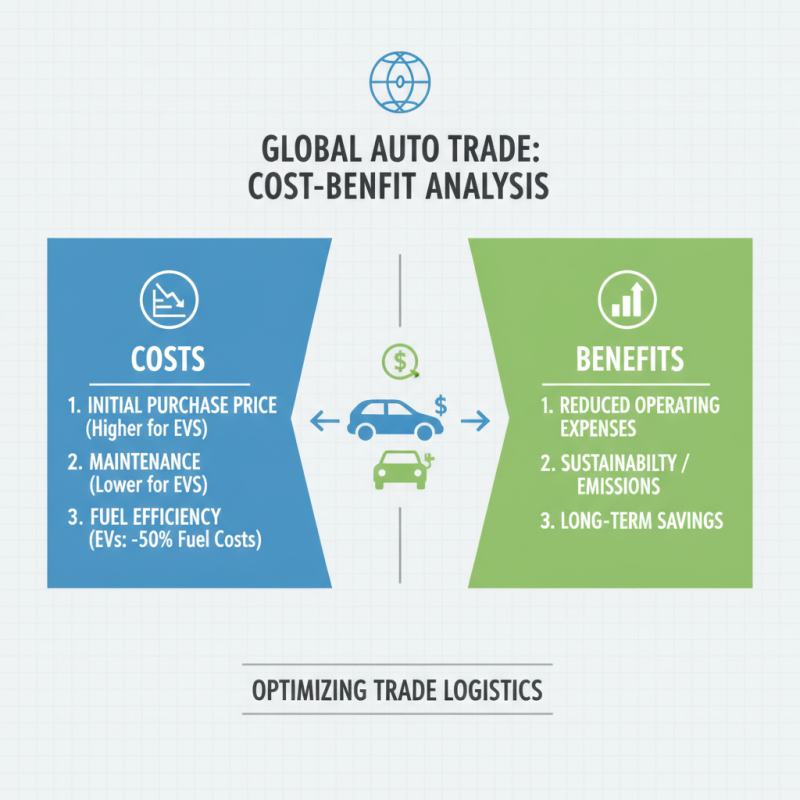
Choosing the right auto models for global trade requires a detailed analysis of costs and benefits. Evaluating costs involves considering initial purchase price, maintenance, and fuel efficiency. For instance, a recent industry report indicated that electric vehicles (EVs) can reduce fuel costs by up to 50% compared to traditional models. However, the upfront investment for EVs is often higher. This financial dichotomy is crucial for businesses aiming to optimize their trade logistics.

When analyzing benefits, factors such as resale value and demand in various markets come into play. According to the International Vehicle Standards Report, hybrids are expected to dominate in certain regions, promising better resale values. However, they may also come with higher servicing costs, creating a dilemma for traders. There is a need to examine each model's long-term reliability, as trade disruptions can arise from vehicle malfunctions.

It's essential to reflect on how model selection impacts overall supply chain efficiency. A low-cost vehicle might save money upfront but could incur higher costs later due to inefficiencies. Evaluating each choice is vital to ensure the best fit for your trading strategy. Identifying patterns in market demand also requires careful observation and adjustments.