Leave Your Message

What Are China Top Energy Cars for Global Buyers?

China’s Energy Cars are no longer confined to domestic roads. They now appear in European cities, Southeast Asian capitals, and emerging markets seeking affordable mobility. Battery electric vehicles, plug-in hybrids, and extended-range models each offer different advantages for global buyers.

Fatih Birol, Executive Director of the International Energy Agency, described electric vehicles as “the most visible success story of the clean energy transition.” His observation explains China’s growing influence. Chinese manufacturers combine large-scale battery production, competitive pricing, advanced software, and rapidly expanding export networks. Models from BYD, Geely, SAIC, NIO, and Chery demonstrate how quickly this sector has matured.

The details matter. A family buyer may compare a 500-kilometre claimed range, fast-charging performance, warranty coverage, and winter efficiency. A fleet operator may focus more on battery durability, service access, and charging downtime. In some markets, a compact city car is more practical than a larger premium SUV. Not every popular model suits every country.

That is the difficult part.

Official range figures can differ from real-world results. Charging standards, import duties, local incentives, and repair networks also change the final ownership experience. Software support may be excellent today but uncertain after several years. Buyers should examine independent road tests, battery warranties, safety ratings, and local after-sales support before making decisions.

This guide evaluates China’s leading Energy Cars through a global buyer’s lens. It considers technology, value, comfort, driving range, reliability, and export readiness. The ranking cannot be perfect. Market conditions change quickly, and practical ownership often reveals more than a showroom specification sheet.
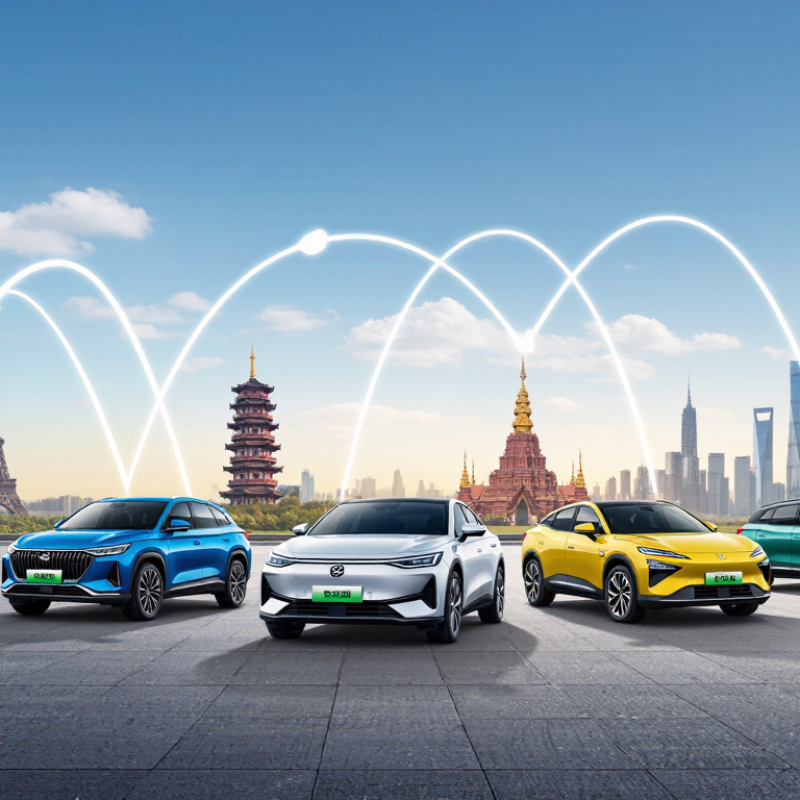
What Are China Top Energy Cars for Global Buyers?

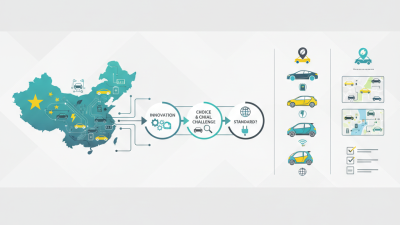
China’s New Energy Vehicle Market and Its Global Importance

China’s new energy vehicle market has become a global industrial force, not merely a large domestic market. The International Energy Agency reported that China sold about eight million electric cars in 2023, representing more than 60% of global electric car sales. This scale supports faster production learning, broader charging networks, and stronger battery supply chains.

The impact also appears in overseas trade. According to the China Association of Automobile Manufacturers, China exported more than 1.2 million new energy vehicles in 2023, an increase of 77.6% from the previous year. These vehicles are reaching markets with different climates, road conditions, tax systems, and charging standards.

A buyer in Northern Europe may need strong winter performance, while a buyer in Southeast Asia may prioritize cooling efficiency and practical charging access.

Battery economics matter greatly. BloombergNEF reported that average lithium-ion battery pack prices fell to 139 US dollars per kilowatt-hour in 2023. China recorded lower average prices than the global level, helping manufacturers offer more varied vehicle sizes and equipment. Still, price alone is not enough. A low purchase cost cannot replace dependable servicing, software support, or transparent warranty terms.

The data also has limits. Export totals show volume, but they do not fully measure long-term reliability or customer satisfaction. Not every model fits every road. That remains an uncomfortable detail.

Main Types of China’s Energy Cars for International Buyers

What Are China Top Energy Cars for Global Buyers?

Main Types of China’s Energy Cars for International Buyers

China’s energy-car market offers several practical choices for international buyers. Battery electric vehicles run only on electricity and produce no tailpipe emissions. They suit urban travel, home charging, and predictable daily routes. A compact electric car may work well for city streets, while larger models provide more space for families and luggage.

Plug-in hybrid cars combine an electric motor with a petrol engine. Drivers can use electric power for short trips and fuel for longer journeys. Extended-range electric cars use the engine mainly to generate electricity. The wheels are driven by electric motors. This design may reduce charging anxiety, but it adds mechanical parts and maintenance needs.

Hydrogen fuel-cell vehicles remain a smaller category. They can refuel quickly, yet suitable stations are limited in many countries. Buyers should check local charging plugs, vehicle certification, battery warranties, repair networks, and software support before ordering. Cold winters, hot climates, and poor road conditions can affect range. Real results may differ from laboratory figures.

A common mistake is choosing only by price. The cheapest vehicle may become expensive without reliable service. I would also question unclear battery histories and vague warranty terms. A careful inspection matters. Test the car, confirm spare-parts access, and compare safety requirements in the destination market. One detail can change everything.

Leading Chinese Energy Car Brands and Their Key Models

China’s leading new-energy car makers now serve several distinct buyer needs. The China Association of Automobile Manufacturers reported 9.5 million new-energy vehicle sales in 2023. Battery-electric hatchbacks remain popular for dense cities, with compact bodies, quick charging, and low running costs. They suit short commutes well.

Key models also include mid-size electric sedans, family SUVs, and premium electric crossovers. Many offer 400–600 kilometres of claimed range under local testing rules. International buyers should compare WLTP or EPA figures instead. A claimed number is not a travel promise.

Real range changes with temperature, speed, luggage, and heating use. The International Energy Agency recorded more than 8 million electric-car sales in China during 2023, representing roughly 60% of global sales. That scale supports faster model updates and wider battery choices.

Plug-in hybrids and extended-range SUVs form another important group. Their small combustion engines or generators reduce charging anxiety on longer journeys. They can be practical where public chargers remain uneven. However, their efficiency depends heavily on regular charging.

The category labels are imperfect. Some “electric” driving experiences still involve complex power systems. Buyers should inspect battery warranties, service coverage, charging standards, and crash-test results before importing. The 2024 ICCT market review also highlights a growing technology gap between official laboratory efficiency and everyday consumption. A careful test drive matters more than a glossy specification sheet.

How to Compare Range, Charging, Safety, and Smart Features

Global buyers should compare energy cars through real use, not brochure numbers. The IEA’s Global EV Outlook 2024 reported more than 14 million electric cars sold worldwide in 2023, showing a rapidly expanding market. Yet range is not perfectly comparable. Test cycles may use mild weather, light traffic, and careful driving. Check the certified range, usable battery capacity, and winter performance. A vehicle promising 500 kilometres may deliver less on highways, especially with heating, luggage, and low temperatures.

Charging deserves equal attention. Review maximum charging power, charging time from 10% to 80%, and the vehicle’s charging curve. A high peak number means little if the car holds it briefly. The IEA reported that public charging points nearly doubled between 2022 and 2023, but availability still differs sharply by country. Buyers should confirm local connector standards, payment systems, and roadside support. Test the cable position at a crowded station. Small details matter.

Safety data should come from independent testing, such as Euro NCAP protocols or equivalent national assessments. Examine adult protection, child protection, cyclist detection, emergency braking, and software update practices. Smart features should reduce workload, not create distraction. The World Health Organization estimates that road crashes cause about 1.19 million deaths annually, so safety cannot be treated as decoration. I pay attention to camera visibility in rain and how clearly alerts are presented. This is imperfect judgment, but a quiet, predictable system may be more valuable than a longer feature list.

Buying, Importing, and Owning a Chinese Energy Car Abroad

For global buyers, “top” should mean suitable, not merely popular. Chinese energy cars now cover battery-electric, plug-in hybrid, and range-extended models. Battery-electric cars suit homes with reliable charging. Plug-in hybrids offer flexibility where public chargers remain limited. I would compare battery size, winter performance, driving range, safety records, and repair access. A lower purchase price can hide expensive shipping or software restrictions.

Importing requires careful research before payment. Check whether the vehicle meets your country’s lighting, crash, emissions, and charging requirements. Confirm the correct driving position and charging connector. Ask for the vehicle identification number, battery certificate, service history, and export documents. Customs duties, registration fees, inspections, and local taxes can change the final cost sharply. A written warranty matters. So does a dependable local technician.

Ownership feels practical when charging is predictable. I once underestimated the space needed for a home charger and cable storage. That small mistake created daily frustration. Install equipment only through licensed professionals, and confirm electrical capacity first. Public charging apps may not work abroad, especially when accounts require regional verification. Keep translation copies of manuals and maintenance records. Software updates, replacement parts, and battery diagnostics need a clear support channel. Some buyers focus on range figures, but real winter traffic, hills, air-conditioning, and aging batteries can reduce them. Plan around the less impressive number.

What Are China Top Energy Cars for Global Buyers? - Buying, Importing, and Owning a Chinese Energy Car Abroad
Energy-Car Type Typical Battery Capacity Typical Certified Electric Range Charging Characteristics Best Use for Global Buyers Important Import and Ownership Considerations
Battery Electric Car (BEV) 30–110 kWh Approximately 250–700 km, depending on test cycle and vehicle size AC charging commonly uses 3.3–22 kW; DC fast charging may range from about 30–350 kW Daily commuting, urban driving, and markets with reliable public charging Confirm charging-port compatibility, local safety certification, software language, navigation coverage, and availability of replacement parts
Plug-in Hybrid Car (PHEV) 10–40 kWh Approximately 40–200 km on electric power alone Usually AC charging; many models do not support high-power DC charging Regions with limited charging infrastructure or buyers who regularly travel long distances Check emissions rules, fuel quality requirements, hybrid-system certification, and whether local tax incentives apply to PHEVs
Extended-Range Electric Car (EREV) 25–50 kWh Approximately 120–300 km on electric power alone AC charging is common; some larger vehicles also support DC fast charging Buyers seeking electric driving with an onboard fuel-powered generator for long trips Verify how the local authority classifies the vehicle, because registration and incentives may differ from a pure BEV
Compact Electric Car 15–40 kWh Approximately 120–300 km Typically 3.3–11 kW AC charging; DC charging may be optional or unavailable Dense cities, short commutes, and buyers prioritizing low energy consumption Assess crash-test results, climate-control performance, motorway stability, and suitability for local road conditions
Electric Sedan 50–110 kWh Approximately 350–700 km AC charging is generally supported; DC charging speed depends on battery and vehicle architecture Long-distance private use, executive transport, and buyers seeking efficiency at motorway speeds Compare real-world motorway range, winter performance, driver-assistance legality, and local insurance classification
Electric SUV or Crossover 50–120 kWh Approximately 300–650 km AC charging is standard; medium and large vehicles commonly offer DC fast charging Families, mixed urban and rural driving, and buyers needing additional ground clearance Check vehicle width, towing approval, underbody protection, tire availability, and local parking or road restrictions
Electric Light Commercial Van 40–100 kWh Approximately 150–400 km, strongly affected by payload and temperature AC charging is common; DC fast charging varies by configuration Urban delivery, service fleets, logistics, and predictable daily routes Confirm commercial-vehicle homologation, payload rating, charging downtime, fleet insurance, and after-sales support
Buyer note: The figures above are typical market ranges rather than specifications for a particular vehicle. Certified range depends on the applicable test cycle, while real-world range is affected by speed, temperature, payload, terrain, heating, and air-conditioning use. Before importing, confirm local type approval, charging standards, customs duties, registration taxes, warranty coverage, data connectivity, and parts support.