What Are the Top Electric Car Models to Buy Worldwide?
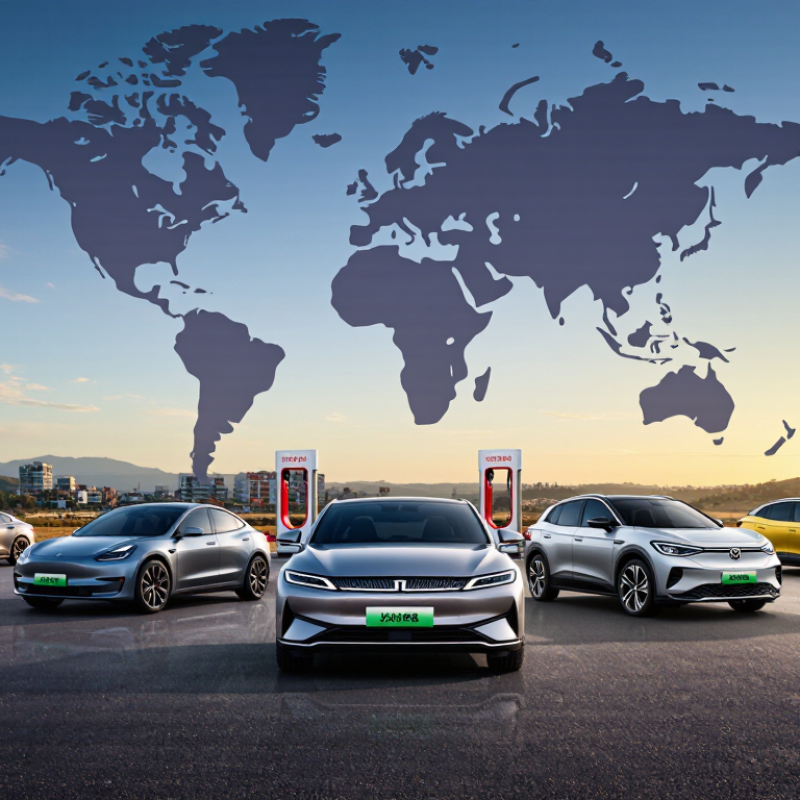
The global electric vehicle market is expanding quickly, but choosing the right model requires more than checking acceleration figures. In the growing Electric Car Car sector, buyers must examine driving range, charging speed, battery warranty, safety scores, cabin comfort, and local service support. A vehicle that performs brilliantly in California may feel less practical in rural Australia or a crowded European city.
Mary Barra, General Motors chair and chief executive, once said, “The auto industry will change more in the next five to ten years than it has in the last fifty.” Her observation explains why this market deserves careful comparison. New platforms arrive rapidly, while charging networks and battery technology continue to develop. Some models already deliver quiet highway travel, strong software, and useful fast-charging performance. Others still compromise on price, winter range, or interior quality.
Real-world details matter.
This guide examines leading electric cars available across major markets, including the Tesla Model 3, BYD Seal, Hyundai Ioniq 5, Kia EV6, Volkswagen ID.4, and other important contenders. It considers independent safety testing, owner experiences, manufacturer reliability data, and regional availability. No single model wins everywhere. That is the uncomfortable part.
A practical buyer may value a dependable warranty over a faster 0–60 time. A family may need rear-seat space and a broad charging network. A city driver may prefer a smaller battery and lower purchase price. The rankings will not be perfect, because conditions differ. Still, they can clarify which electric cars offer genuine value, mature engineering, and realistic everyday usability worldwide.
What Defines a Top Electric Car for Global Buyers
A top electric car for global buyers is not simply the model with the longest advertised range. It must deliver dependable efficiency across hot cities, cold highways, and uneven charging networks. The International Energy Agency reported that global electric car sales exceeded 17 million in 2024, showing that buyers increasingly value practical ownership, not novelty. Range is not everything.
Real-world range matters more than laboratory figures. A strong vehicle should offer predictable consumption, fast charging, and clear battery information. In winter, a heat pump and effective thermal management can preserve useful distance. In dense urban areas, compact dimensions and efficient regenerative braking may matter more than a large battery. BloombergNEF reported that average lithium-ion battery-pack prices fell to 115 dollars per kilowatt-hour in 2024. That decline could support more affordable vehicles, but replacement costs still deserve careful checking.
Reliability also defines a top electric car.
Buyers should examine independent safety testing, warranty coverage, software-update policies, repair access, and battery durability. The European New Car Assessment Programme continues to assess crash protection and driver-assistance performance, offering a valuable comparison point. The ICCT has found that electric cars generally produce lower lifetime greenhouse-gas emissions than combustion vehicles, even after manufacturing impacts. Results vary by electricity source. That is easy to overlook.
A genuinely global choice should fit local roads, charging standards, climate conditions, and household budgets. My own judgment would remain cautious when a vehicle depends heavily on subscription features or sparse service networks. Convenient technology can age badly.
How Electric Car Models Compare by Range, Charging, and Efficiency
Choosing among leading electric car models starts with usable range, not the largest number on a specification sheet. Certified figures provide a fair baseline, yet winter air, hills, speed, and heating can reduce distance noticeably. In comparative road tests, a model rated near 300 miles may deliver 220 to 250 miles on a cold motorway journey. That gap matters. Battery size is also easy to overlook. A smaller battery may travel farther per kilowatt-hour when the vehicle is lighter and more aerodynamic.
Charging performance depends on more than peak power. A vehicle accepting 200 kW may add energy quickly only within a narrow battery range. The charging curve matters. Independent tests should record minutes needed from 10 to 80 percent, not only the advertised maximum. Home charging is slower but often cheaper and gentler on the battery. A 7 kW wall unit can add roughly 35 to 50 miles overnight, depending on efficiency and local conditions. Public chargers vary widely. Some sites share power between stalls.
Efficiency reduces energy use on every journey. Look for consumption near 15 to 18 kWh per 100 km, although size and weather change the result. Heat pumps may improve winter performance, but they are not magic. Tire pressure, cabin temperature, and roof loads all count. Compare independent tests, battery preconditioning, warranty terms, and route-planning accuracy. Published tests cannot predict every driver’s routine perfectly. A calm urban commute may look excellent, while fast travel exposes the model’s limits.
What Are the Top Electric Car Models to Buy Worldwide? - How Electric Car Models Compare by Range, Charging, and Efficiency
| Anonymous Vehicle Profile |
Battery Capacity
(usable, kWh) |
Official Range
(km, WLTP) |
Estimated EPA Range
(km) |
Energy Efficiency
(Wh/km, WLTP) |
Peak DC Charging
(kW) |
10–80% Charging
(minutes) |
Best Suited For |
| Profile A — Long-Range Executive Sedan |
112 |
725 |
660 |
154 |
300 |
32 |
Long-distance travel |
| Profile B — Ultra-Efficient Sedan |
77 |
614 |
581 |
126 |
235 |
18 |
Low-cost commuting |
| Profile C — Premium Long-Range Sedan |
108 |
822 |
560 |
131 |
200 |
31 |
Maximum rated range |
| Profile D — Fast-Charging Crossover |
77 |
528 |
499 |
146 |
235 |
18 |
Frequent road trips |
| Profile E — Efficient Family Hatchback |
77 |
709 |
575 |
108 |
200 |
26 |
Family commuting |
| Profile F — Compact Electric SUV |
87 |
625 |
515 |
139 |
150 |
32 |
All-purpose family use |
| Profile G — Mid-Size Electric SUV |
77 |
528 |
470 |
146 |
170 |
30 |
Mixed urban and highway driving |
| Profile H — Compact Urban EV |
52 |
420 |
362 |
124 |
100 |
30 |
City driving and affordability |
Notes: Figures represent published specifications for comparable production electric vehicles and are shown without manufacturer or brand names. WLTP and EPA results use different testing methods; real-world range may vary with weather, speed, load, temperature, and driving style. Charging times assume a compatible high-power DC fast charger and may vary by battery temperature and state of charge.
How to Choose the Right Electric Car for Different Driving Needs
Choosing the right electric car starts with your daily routine, not a popularity ranking. A compact model may suit city streets, tight parking spaces, and short commutes. Larger vehicles offer more luggage room, but they usually consume more energy. Check the usable battery range, not only the advertised figure. Cold weather, steep roads, heavy traffic, and air conditioning can reduce distance noticeably.
Drivers with home charging can consider a smaller battery and overnight charging. Apartment residents should inspect public charger coverage near home, work, and regular travel routes. Frequent highway users may need fast charging, stable cabin comfort, and predictable range at higher speeds. Families should test rear-seat space, child-seat access, boot height, and safety features in person. A quiet cabin can feel impressive during a short drive, yet road noise may appear after several hours. Real use reveals these details.
Tips: Compare charging times using the same battery percentage. Review independent safety tests and long-term reliability data. Ask about battery warranties and service access in your region. Keep a small reserve for unexpected detours. Do not choose range alone. A car with excellent range may still be unsuitable if charging is inconvenient or its seats cause discomfort. My own comparison mistake was focusing too heavily on specifications. The practical fit mattered more. Test the car on familiar roads, including a hill, a rough surface, and a crowded parking area.