Leave Your Message
Choosing the best Energy Cars in 2026 means looking beyond a headline range figure. Buyers should compare real-world efficiency, charging access, purchase price, warranty coverage, and the type of driving they do each week. A compact electric car may suit a short urban commute, while a plug-in hybrid can offer flexibility where charging remains inconvenient. No single model is best for everyone.
The International Energy Agency’s Global EV Outlook 2025 reports that electric-car sales exceeded 17 million worldwide in 2024, reaching more than one-fifth of new-car sales. The IEA also projected sales above 20 million in 2025. That rapid growth expands buyer choice, but it does not make every vehicle a good fit. A winter commute, a steep driveway, or an apartment without home charging can change the calculation.
Efficiency deserves equal attention. The U.S. Environmental Protection Agency’s Automotive Trends Report tracks fuel economy and technology across new vehicles, offering useful context beyond manufacturer claims. For comparisons, check official EPA ratings, then consider how speed, weather, cargo, and charging habits may affect daily results. Small details matter.
This guide compares leading electric, hybrid, and plug-in hybrid options using published specifications and practical ownership factors. Some estimates will not match every driver’s experience; real-world use is messier than a test cycle. That uncertainty is worth acknowledging before choosing.
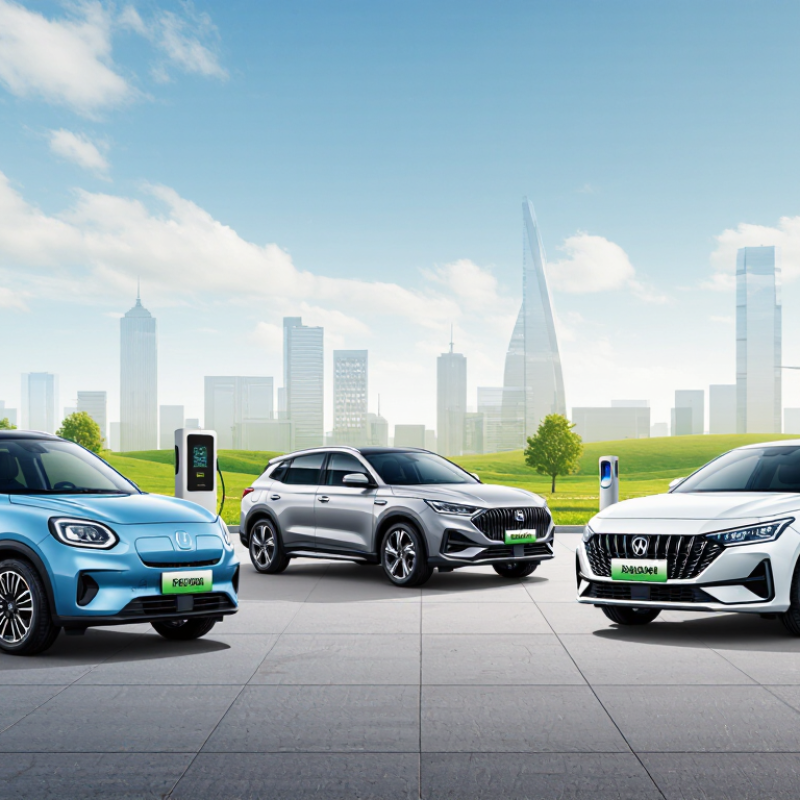
Energy-efficient cars are not one technology. A battery-electric vehicle (BEV) uses an electric motor and a rechargeable battery, with no onboard fuel-burning engine. It may suit drivers who can charge at home or near work. A cable beside a parked car can become part of the daily routine. Quiet, too.
A conventional hybrid combines an engine with an electric motor and battery, but usually cannot be plugged in. It recovers some energy during braking and can use electric power at low speeds. A plug-in hybrid (PHEV) has a larger battery that drivers can charge externally. It can cover some trips on electricity, then rely on fuel when the battery is depleted. That flexibility sounds ideal, but only if owners actually plug it in.
An efficient internal-combustion-engine (ICE) car still burns fuel, yet uses less through measures such as a smaller engine, lighter body, or improved aerodynamics. For a driver without reliable charging, it may be a practical choice. Compare energy use under similar driving conditions, not just a single advertised figure. Cold weather, high speeds, short journeys, and heavy loads can change real-world consumption. The categories overlap in everyday benefits, and no label guarantees the lowest impact for every household. A little humility helps here.
| Vehicle Type | How It Works | Typical Efficiency Range | Driving on Electricity | Best Suited To | Main Trade-Offs | What to Check Before Buying |
|---|---|---|---|---|---|---|
| Battery Electric Vehicle (BEV) | Runs solely on electricity stored in a rechargeable battery; it has no gasoline engine or tailpipe emissions. | Many current models are rated at roughly 90–130 MPGe combined. Range varies widely by vehicle, weather, speed, and driving conditions. | All driving is electric. The battery is charged from an external power source. | Drivers with access to home, workplace, or convenient public charging, especially those with predictable daily travel. | Requires charging planning for longer trips. Cold weather, high speeds, and cabin heating can reduce range. | Compare EPA-rated range and efficiency, charging speed, battery warranty, local charging access, and total ownership cost. |
| Conventional Hybrid (HEV) | Combines a gasoline engine with an electric motor and a small battery that is recharged mainly through regenerative braking and the engine. | Many passenger-car hybrids achieve about 40–55 mpg combined; larger or less aerodynamic vehicles may use more fuel. | Electric power assists the engine, but the vehicle generally cannot be plugged in or driven far on electricity alone. | Drivers who want better fuel economy without installing a charger or changing refueling habits. | Still uses gasoline and produces tailpipe emissions. Fuel savings depend on vehicle type and driving conditions. | Check EPA combined and city ratings, because hybrids often benefit more in stop-and-go driving than on steady high-speed trips. |
| Plug-In Hybrid (PHEV) | Pairs a rechargeable battery and electric motor with a gasoline engine; it can be plugged in and also refueled with gasoline. | Electric range is commonly around 20–50 miles, while gasoline fuel economy varies substantially by model and battery charge. | Can cover some trips using electricity when charged. After the battery's charge-depleting range is used, the gasoline engine typically provides propulsion. | Drivers who can charge regularly, make many short trips, and still want gasoline backup for longer journeys. | Efficiency depends on frequent charging. Carrying both electric and gasoline powertrains can add weight and complexity. | Compare EPA electric range, charge-depleting and charge-sustaining fuel economy, charging time, and your typical daily distance. |
| Efficient Internal-Combustion Engine (ICE) | Uses a gasoline or diesel engine without an electric drive system capable of propelling the vehicle. | Many efficient gasoline passenger cars are rated around 30–40 mpg combined; ratings vary by body style, engine, and transmission. | None; energy comes from liquid fuel. | Drivers without practical charging access, or those who prioritize familiar refueling and broad long-distance flexibility. | Fuel use and tailpipe emissions continue throughout operation; city driving can reduce fuel economy. | Compare EPA combined ratings, fuel type, maintenance schedule, and real-world economy for your usual route and climate. |
How to compare: MPGe is an EPA measure that expresses energy consumption in gasoline-equivalent terms; it is not the same as miles per gallon. Fuel-economy and range figures are broad, illustrative ranges rather than guarantees. Check the EPA label and current official ratings for each vehicle, and consider local electricity generation, fuel prices, charging access, climate, and driving habits.