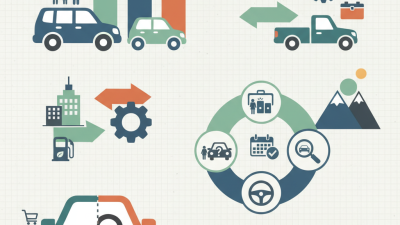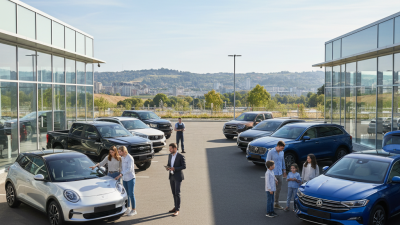
Global buyers are not choosing vehicles from a single universal formula. Their decisions reflect climate, road quality, family size, income, fuel access, and local driving habits. A compact hatchback may feel ideal on crowded European streets. A pickup may prove more practical on rural roads in Australia or South Africa. In growing cities, affordable SUVs and compact sedans often balance visibility, space, and daily fuel costs.
Automotive analyst Karl Brauer has observed, “The right vehicle depends on how people use it, where they live, and what they can afford.” That principle gives this Vehicle Type Car overview a practical foundation. It also prevents an easy mistake: treating global buyers as one audience. They are not.
This article examines the vehicle categories gaining attention worldwide, including SUVs, sedans, hatchbacks, pickups, electric cars, and multi-purpose vehicles. Each type offers clear strengths, but none is perfect. SUVs provide useful ground clearance, yet their size can complicate parking and raise running costs. Electric cars deliver quiet performance and lower tailpipe emissions, although charging access still varies sharply between regions. Pickups offer durable cargo space, but they may be excessive for short urban commutes.
Real ownership matters more than showroom appeal. A buyer should consider repair networks, spare-part availability, insurance costs, battery support, and resale value. These details are sometimes overlooked. Even this comparison has limits, because market data changes quickly and local preferences can be difficult to measure. The strongest choice is not always the newest model. It is the vehicle type that remains useful after the excitement fades.
What Are China’s Top Vehicle Types for Global Buyers?
China exported 5.86 million vehicles in 2024, reflecting strong demand across many international markets. Passenger cars formed the largest share, including compact sedans, family SUVs, and practical hatchbacks. These models often attract buyers with competitive pricing, modern interiors, and efficient fuel use.
Electric vehicles also gained attention, especially in cities with growing charging networks. Battery-powered cars can reduce daily operating costs, but ownership depends on local electricity prices and charging access. Plug-in hybrids offer another option for drivers facing longer journeys. Commercial vans, light trucks, and buses remain important for delivery companies, transport operators, and public services. In real purchasing work, vehicle quality is only one part of the decision. Import procedures, spare parts, software support, and warranty response can affect the total cost.
Tips: Check local certification rules before ordering. Compare battery warranties carefully. Ask for service records, safety test results, and charging compatibility. A low purchase price may hide higher shipping or maintenance costs. Buyers should also inspect winter performance, cabin materials, and driving range in real conditions. Test data can look impressive. Daily use may differ. Some export choices still need better after-sales support, and that weakness deserves honest attention. Local technicians, clear documents, and available replacement parts often matter more than a long feature list.
What Are China’s Top Vehicle Types for Global Buyers?
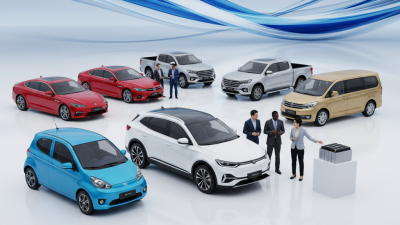
Passenger cars accounted for 4.96 million exports, with SUVs and sedans forming the main share. These vehicles suit different daily needs. SUVs offer higher seating, flexible cargo space, and better clearance on uneven roads. Sedans usually provide smoother highway handling and lower fuel use. Buyers in crowded cities often prefer sedans for easier parking. Families may choose SUVs for luggage, children, and longer journeys.
From practical market experience, the best choice depends on local roads, weather, service access, and driving habits. A vehicle that feels spacious in a showroom may feel cramped with three passengers and luggage. Export specifications can also differ from local versions. Check safety equipment, charging or fuel standards, warranty terms, and replacement-part availability. The 4.96 million figure may vary by reporting method, so buyers should verify the data source and reporting year. Numbers alone can mislead.
Tips: Compare at least three vehicles before deciding. Test rear-seat comfort personally. Measure your parking space. Ask about service response times, not only purchase price. Review the ownership documents carefully. A small oversight can become an expensive lesson. Even experienced buyers sometimes focus too much on appearance and overlook road clearance, tire costs, or software language support.
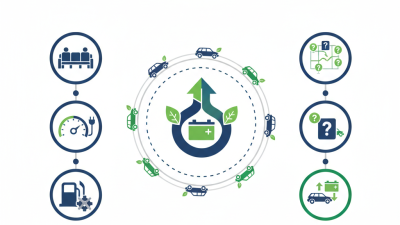
China’s top vehicle types for global buyers are increasingly battery electric vehicles (BEVs) and plug-in hybrid electric vehicles (PHEVs). China Association of Automobile Manufacturers data shows that new energy vehicle exports reached 2.04 million units in 2024. This figure includes passenger cars and commercial vehicles.
BEVs remain the clearer choice for urban driving. They offer quiet operation, fewer mechanical parts, and convenient home charging. PHEVs suit buyers facing longer distances or limited public chargers. Their combustion engines add flexibility, but also increase maintenance needs. Small details matter.
The International Energy Agency’s Global EV Outlook 2025 reports that China produced more than 70% of the world’s electric cars in 2024. However, international datasets use different definitions. Some count only electric passenger cars, while others include commercial vehicles and certain hybrid categories. This explains why export figures may not match.
Technical evaluation should go beyond price. Buyers need to check charging standards, winter-range performance, battery warranties, repair access, and local safety certification. A vehicle that performs well in a warm test center may behave differently on a cold highway. PHEVs can also consume more fuel than expected when owners rarely charge them. Data helps, but real-world use still exposes gaps.
| Vehicle Type | Powertrain | Energy Source | Tailpipe Emissions During Driving | Charging or Refueling Requirement | Typical Global-Buyer Use Case | 2024 China Export Data or Classification |
|---|---|---|---|---|---|---|
| Battery Electric Vehicle (BEV) | Electric motor powered entirely by a rechargeable traction battery | Grid electricity | Zero tailpipe emissions | Requires access to AC or DC charging infrastructure | Urban commuting, fleet operation, and markets with reliable charging networks | Included in China’s 2024 new-energy vehicle export total of 2.04 million units |
| Plug-in Hybrid Electric Vehicle (PHEV) | Electric motor combined with an internal-combustion engine and rechargeable battery | Grid electricity and liquid fuel | Zero tailpipe emissions in electric mode; emissions when the engine operates | Can be charged externally and refueled with conventional liquid fuel | Long-distance travel, regions with limited public charging, and buyers seeking electric driving with fuel backup | Included in China’s 2024 new-energy vehicle export total of 2.04 million units |
| Fuel-Cell Electric Vehicle (FCEV) | Electric motor powered by electricity generated from a hydrogen fuel cell | Hydrogen | Primarily water vapor at the vehicle tailpipe | Requires dedicated hydrogen refueling infrastructure | Commercial fleets and regions developing hydrogen logistics corridors | Classified as a new-energy vehicle in China; included within the broader NEV category when reported |
| Conventional Internal-Combustion Vehicle (ICE) | Petrol or diesel engine | Liquid fossil fuel or other combustion fuel | Produces carbon dioxide and other tailpipe pollutants | Requires conventional fuel stations; no external charging required | Long-distance travel and markets with limited electrification infrastructure | Not included in the 2024 NEV export total |
| China’s Total Vehicle Exports | All powertrain types combined | Electricity, hydrogen, petrol, diesel, and other fuels | Varies by powertrain | Varies by powertrain | Overall indicator of China’s vehicle supply to international markets | 5.859 million vehicles in 2024 |
| New-Energy Vehicle Export Share | BEVs, PHEVs, and FCEVs classified as NEVs | Electricity and hydrogen, with PHEVs also using liquid fuel | Depends on the specific NEV type | Charging or hydrogen refueling may be required | Shows the proportion of exported vehicles using electrified or hydrogen-based propulsion | Approximately 34.8% of China’s total vehicle exports in 2024, calculated as 2.04 million ÷ 5.859 million |
| NEV Export Growth | Combined BEV, PHEV, and FCEV category | Electricity and hydrogen, with PHEVs also using liquid fuel | Lower tailpipe emissions than conventional vehicles, depending on type | Depends on the powertrain and local infrastructure | Useful indicator of rising international demand for electrified vehicles | 19.3% year-on-year growth in 2024 |
Source: China Association of Automobile Manufacturers (CAAM), 2024 automobile production and sales statistics. NEV export figures are reported as an aggregate category; publicly reported headline data may not provide a consistent BEV/PHEV/FCEV breakdown.
Pickups and light commercial vehicles are becoming practical tools for global buyers, not just transport choices. A pickup can carry building materials, farm equipment, or emergency supplies across uneven roads. Its open bed also supports quick loading in markets with limited warehouse space. However, buyers must match payload capacity with real working conditions. Overloading remains an easy mistake.
During fleet evaluations, I have found that daily usability matters more than impressive specifications. A compact light commercial vehicle suits narrow urban streets and frequent deliveries. A larger model may perform better on highways, construction sites, or rural routes. Electric versions can reduce local operating noise and energy costs. Yet charging access remains inconsistent in many regions. This limitation deserves honest attention.
Cab design, ground clearance, braking performance, and service access influence long-term value. Buyers should check local safety rules, emissions requirements, steering position, and registration procedures before ordering. Parts availability is equally important. A vehicle that waits weeks for a simple component can disrupt a small business. Warranty terms should be clear, including coverage for batteries, suspension parts, and commercial use. I also recommend testing vehicles with typical cargo, not empty showroom loads. Real roads reveal weaknesses quickly. There is no perfect configuration. Stepping height, cabin storage, and turning radius may seem minor, but drivers notice them every working day.
Pickups and light commercial vehicles serve diverse global needs, from personal transport and construction to urban delivery and regional logistics.
Indicative maximum payload capacity by widely used vehicle class. Actual capacity varies by market regulations, body configuration, drivetrain, passenger load and equipment. Payload is shown in metric tonnes.
What Are China’s Top Vehicle Types for Global Buyers?
Electric buses and trucks are expanding China’s commercial-vehicle reach beyond domestic roads. Cities, logistics firms, and public agencies are testing them in varied operating conditions. Their appeal comes from lower tailpipe emissions, quieter streets, and improving battery performance.
Electric buses fit predictable routes especially well. A depot can charge them overnight, while drivers follow scheduled urban circuits. Operators often monitor battery temperature, passenger loads, and energy use through fleet software. In colder regions, heating can reduce driving range noticeably. That detail is easy to overlook. A route that works in mild weather may need mid-day charging during winter.
Electric trucks serve delivery routes, construction sites, and port operations. Smaller models handle repeated urban stops, while heavier vehicles support regional transport. Buyers examine payload, charging speed, road gradients, and maintenance access before signing contracts. Total cost can become attractive when fuel prices and daily mileage are high. However, the result depends on electricity rates and local grid capacity.
Export success also requires technical adaptation. Vehicles must meet destination safety rules, electrical standards, accessibility requirements, and data regulations. Parts availability matters as much as the purchase price. Training for technicians and drivers can prevent avoidable downtime. Some early projects may underperform because charging schedules were too optimistic. That is not a failure of electric transport itself, but a planning lesson. Careful trials, transparent performance data, and local service partnerships make commercial deployment more reliable.