How to Choose the Best Electric SUV for Your Needs?
Choosing the right electric SUV starts with your daily routine, not a glossy range figure. How far do you drive on a typical weekday? Do you have a home charger, or will public charging shape your plans? These details matter. Electric Suv Vehicles differ in real-world range, charging speed, cabin space, and winter efficiency. A family carrying sports gear may need a different layout than a solo commuter parking on a narrow city street. Even a quiet test drive can reveal useful clues, such as seat comfort, visibility, and how easily child seats fit.
This guide will help you compare those practical needs with verified specifications and ownership costs. Look beyond the advertised range: speed, temperature, hills, and heating use can change how far a vehicle travels between charges. Check battery and warranty details, available charging options, and independent road tests where possible. Small print matters. A larger battery may sound reassuring, but it can also raise the purchase price and add weight. There is no perfect choice for every driver, and online comparisons cannot recreate your own commute. Start with the journeys you actually make, then weigh comfort, budget, and charging access. A short test drive may still leave questions; that is a reason to investigate further, not to rush.
Define Your Driving Habits, Passenger Needs, and Budget
How to Choose the Best Electric SUV for Your Needs?
Define Your Driving Habits, Passenger Needs, and Budget
Start with an ordinary week, not an ideal road trip. Note your daily distance, regular destinations, and how often you drive beyond town. If most trips are short, a huge driving range may not justify its added cost. But frequent long journeys make charging access and travel time more important. Cold weather can reduce available range, so leave a practical buffer rather than planning around the maximum figure. Check whether you can charge where you park overnight. If not, map nearby public chargers and consider how often you would realistically use them.
Convenience matters.
Think about who and what travels with you. Bring a child seat, stroller, or bulky work bag to a dealership, and check the fit yourself. Seat numbers alone do not tell the whole story. Rear legroom, door openings, and cargo-space shape can change daily comfort. A vehicle may look roomy but feel cramped once everyone climbs aboard. That test is worth doing.
Set a budget that includes more than the purchase price. Home charging equipment, installation, insurance, tires, and electricity can affect ownership costs. Ask for written estimates, and compare them with your current vehicle’s expenses. It is tempting to treat advertised range or charging speed as a promise; real results vary with temperature, speed, and charger conditions. Your estimate may still be imperfect. Refine it after a test drive and a realistic look at your parking and charging routine.
Compare Driving Range and Charging Options
An electric SUV’s listed range is a starting point, not a daily promise.
Compare its EPA-estimated range with your longest regular drive, then allow room for detours. Cold matters.
In AAA’s 2019 cold-weather test, a 20°F day with cabin heating reduced tested electric-car range by about
41%.
That result does not predict every SUV’s performance, but it makes winter and highway driving worth considering.
Charging speed can matter as much as battery size.
The U.S. Department of Energy’s Alternative Fuels Data Center gives typical Level 2 charging rates of
10–20 miles of range per hour.
DC fast charging can add roughly 60–80 miles in 20 minutes, though the vehicle, charger, and battery temperature affect actual speed.
Home charging is calmer.
Check whether your parking setup can support it before relying on public stations.
The International Energy Agency reported more than three million public charging points worldwide in 2023,
a roughly 40% increase from the previous year. Useful context, not a guarantee. Local availability, reliability, and queues can differ sharply.
I would not choose from a range figure alone:
map a familiar long trip and check charging stops, then ask whether the available charging speed fits your usual schedule. A charger nearby may still be inconvenient if it is often occupied.
Assess Size, Cargo Space, and Interior Features
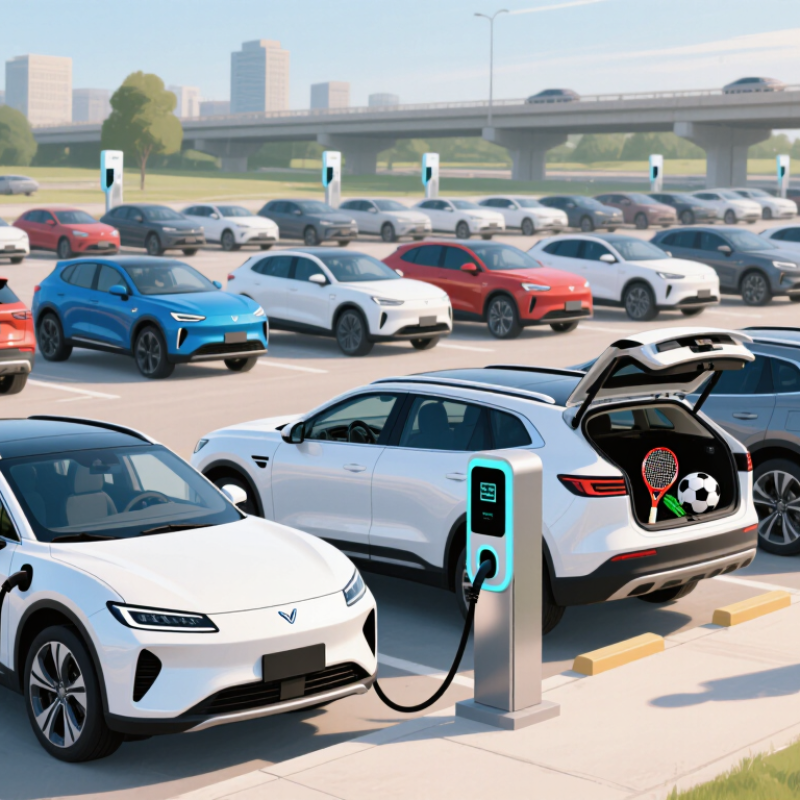
Base your choice on the people and gear you carry most often. A spec-sheet maximum is only a starting point. Measure your garage opening and parking space, then compare the SUV’s length and turning room. Sit in every row, checking headroom, knee room, and access with a child seat installed. A roomy cabin can still feel awkward if the doors barely open beside a wall. That trade-off is easy to miss.
Cargo figures don’t tell the whole story. Check whether the rear seats fold flat, how high you must lift bags, and whether the hatch opening fits bulky items. Bring a stroller or suitcase you use regularly, and try loading it yourself. Look for useful underfloor storage, too, but check whether it reduces space for other essentials. Inside, test seat adjustments, visibility, charging-port locations, and controls you can operate without hunting through menus. Comfort is personal; a seat that feels fine for five minutes may not suit a longer drive.
Tips: Try it loaded. Fold the rear seats, place your usual bags inside, and sit in the back. Note what feels cramped or inconvenient, even if the numbers look good on paper.
How to Choose the Best Electric SUV for Your Needs?
Compare typical cargo-space ranges to find a size that fits your passengers and everyday gear.
These indicative ranges reflect variation across published vehicle specifications, not standardized class averages. Cargo volume depends on the measurement method; for three-row SUVs, the large-SUV range assumes the third row is folded. Check the listed space behind the seats you’ll actually use, then assess child-seat access, storage compartments, and interior features such as adjustable seating and charging ports.
Evaluate Performance, Safety, and Available Technology
Performance is more than a quick launch from a traffic light. Check how smoothly the SUV accelerates, brakes, and handles on roads you actually use. If possible, take a test drive over rough pavement and a steep hill. Notice whether the ride stays comfortable and the cabin remains quiet. Range matters. Compare the estimated range with your usual commute, then leave room for cold weather, highway speeds, and extra cargo. A full load of passengers can change the experience. It is easy to focus on the largest range figure, but daily comfort may matter more.
Safety deserves a close look, not a quick glance at a feature list. Review independent crash-test results and check visibility from the driver’s seat. Try the parking cameras and sensors in a crowded lot. Driver-assistance systems can reduce strain, but they are not substitutes for attention. Their warnings may feel intrusive, or arrive later than you expect. That assumption can be wrong. Test them yourself.
Technology should make everyday trips simpler. Explore the navigation system’s route planning, charging-stop estimates, and phone connection before buying. Check whether key settings are easy to find while parked. Ask how software updates work and whether useful features require a subscription. A polished screen is not always an intuitive one. Picture a rainy evening, a low battery warning, and a child waiting in the back seat. The right SUV should still feel manageable then.
Compare Total Ownership Costs and Test-Drive Your Shortlist
An electric SUV’s sticker price is only one part of the decision. Compare the expected cost over the years you plan to keep it, not just the monthly payment. Include insurance quotes, home-charger installation, public charging, tires, maintenance, and likely depreciation. Electricity costs vary with local rates and charging habits, so use your own bills where possible. Check whether your parking setup can support home charging before counting on overnight convenience.
Build a simple spreadsheet for each finalist. Use the same annual mileage and ownership period, then test a low-cost and high-cost scenario. Include any financing costs and confirm warranty coverage in the vehicle’s official documents. Estimates are imperfect. Resale values can shift, and a spreadsheet cannot predict every repair or rate change. Still, consistent assumptions make comparisons more useful than optimistic guesses.
Then test-drive your shortlist on familiar roads. Try a rough patch, a tight parking space, and a stretch of faster traffic. Notice seat comfort, visibility, braking feel, and how easily you can reach the controls. Bring passengers and check rear-seat space and cargo room with your usual bags. If possible, test charging-route planning and try the charging connector yourself. A quiet cabin may impress at first, but fatigue after a longer drive matters too. Take notes immediately; small differences are easy to forget later.