Leave Your Message

10 Tips for Buying Cars and Trucks Worldwide

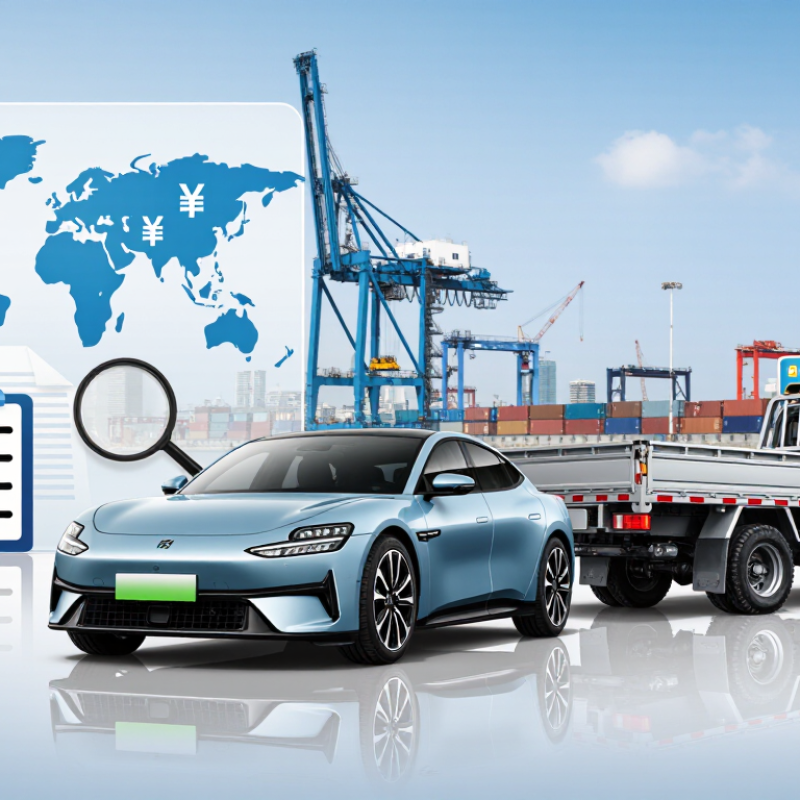
Buying a car or truck across borders is no longer a simple price comparison. Currency changes, shipping costs, equipment standards, taxes, and warranty limits can reshape the final bill. The International Energy Agency reported that global electric-car sales approached 14 million in 2023, proving how quickly vehicle choices are changing. Yet conventional trucks still dominate many work, towing, and rural markets. Buyers need evidence, not attractive photographs.

Michelle Krebs, executive analyst at Cox Automotive, has emphasized, “Affordability remains the key issue for consumers.” That principle anchors this Car Truck Car guide. Cox Automotive market reports continue to track pressure from vehicle prices, interest rates, and limited household budgets. S&P Global Mobility also reports a steadily aging vehicle fleet in major markets, making inspection history increasingly important. A shiny dashboard cannot reveal flood damage, hidden repairs, or expensive battery deterioration.

The ten tips ahead examine research, seller verification, financing, inspections, transportation, documentation, and after-sale support. Small details matter. Check the VIN twice. Read the warranty exclusions. Measure the truck bed before ordering equipment. Ask who pays when a vehicle arrives damaged. No checklist removes uncertainty. This guide may overlook unusual regional rules, and that weakness deserves attention. Conditions change quickly, especially for electric vehicles and imported trucks. Therefore, confirm every cost with qualified local professionals and official agencies before payment. Careful buying is slower, but one careful hour can prevent months of expensive disappointment.

10 Tips for Buying Cars and Trucks Worldwide

Define Your Vehicle Needs and Set a Realistic Budget

Buying a car or truck worldwide begins with an honest description of your daily needs. Count your passengers, cargo, driving distance, road conditions, and parking space. A compact vehicle may suit narrow city streets, while a truck may be necessary for tools, trailers, or rough access roads. Do not choose extra power without a practical reason. It increases purchase and running costs.

Set a budget beyond the advertised price. Include registration, insurance, taxes, shipping, fuel, servicing, tires, and unexpected repairs. In some markets, imported vehicles also require inspections or equipment changes. Keep an emergency reserve for at least three months of vehicle expenses. A useful rule is to compare the full annual cost, not only the monthly payment.

I once underestimated maintenance costs because the vehicle looked clean during a short inspection. That was an expensive lesson. Ask for service records, check the underside for corrosion, and arrange an independent mechanical inspection. Test the vehicle cold, not after the seller has warmed it. Leave room for doubt. A budget that works only when nothing breaks is not realistic. Prices, road taxes, and repair access differ greatly between countries, so confirm figures with local authorities and qualified technicians before committing.

Define Your Vehicle Needs and Set a Realistic Budget

Estimated annual fuel costs for common vehicle categories, based on 15,000 km of driving per year and a fuel price of $1.50 per liter. Use this comparison alongside purchase price, insurance, maintenance, and financing costs when planning your budget.

Compare Global Markets, Models, and Ownership Costs

Buying a car or truck across borders requires more than comparing showroom prices. Global markets differ in taxes, safety rules, fuel standards, and repair networks. A low sticker price may hide costly import duties or registration fees. Check official customs portals and transport authorities before making a deposit. Ask for written figures, not verbal estimates. Currency changes can also alter your budget within weeks.

Compare models by purpose, not appearance. A compact vehicle may suit narrow European streets, while a larger truck may perform better on rural roads. Study engine size, payload, ground clearance, fuel use, and cabin space. Parts availability matters in smaller markets. An independent inspection can reveal corrosion, flood damage, or uneven repairs. Photos are helpful, but incomplete.

Ownership costs deserve a full-year calculation. Include insurance, servicing, tires, roadside assistance, financing, parking, and local inspections. Electric models may reduce daily energy costs, yet battery warranties and charging access vary widely. My first comparison was too optimistic because I ignored seasonal tire costs. That mistake changed the real price. Keep a reserve for unexpected repairs. Speak with local owners and licensed technicians, then verify their claims against official records.

10 Tips for Buying Cars and Trucks Worldwide - Compare Global Markets, Models, and Ownership Costs

No. Buying Tip Global Comparison Realistic Market Benchmark Ownership-Cost Effect Practical Action
1 Compare the total purchase price, not only the advertised price. A vehicle priced in one country may become substantially more expensive after customs duty, value-added tax, registration, port handling, and compliance work. Imported vehicles commonly incur shipping, insurance, customs processing, and local taxes. Combined taxes alone can range from approximately 0% to more than 100% of the customs value, depending on the market and vehicle type. A low purchase price can be offset by import charges. Budget an additional 10%–35% for logistics and administration before local taxes, with higher exposure in heavily protected markets. Build a landed-cost worksheet showing vehicle price, freight, insurance, duty, tax, inspection, registration, and delivery charges separately.
2 Match the vehicle class to the actual workload. Compact cars usually minimize urban running costs, while pickup trucks and large sport-utility vehicles provide greater payload, towing, and ground clearance but consume more fuel and tires. Typical payload ranges: compact car 350–500 kg; midsize pickup 700–1,000 kg; heavy-duty pickup 1,000–1,500+ kg. Towing limits vary widely by configuration and local law. A large truck used mainly for commuting can add roughly USD 600–1,500 per year in fuel expense compared with an efficient compact vehicle, assuming 15,000 km annually. List passenger capacity, cargo volume, payload, towing weight, road conditions, and annual distance before selecting an engine or body style.
3 Use fuel economy and local fuel prices together. Fuel prices differ considerably among North America, Europe, Asia-Pacific, Africa, and the Middle East. A fuel-efficient vehicle creates greater savings where fuel taxes are high. For a vehicle using 7 L/100 km and traveling 15,000 km per year, annual consumption is about 1,050 L. At USD 1.20–2.00 per litre, fuel costs approximately USD 1,260–2,100 annually. Improving consumption from 10 L/100 km to 7 L/100 km saves about 450 L per 15,000 km, equal to approximately USD 540–900 at the stated fuel-price range. Calculate annual fuel cost using local pump prices, expected distance, traffic conditions, terrain, and the vehicle's combined consumption rating.
4 Check emissions, safety, and homologation requirements. A vehicle approved for one regulatory system may require lighting, emissions, crash-safety, or software modifications before registration elsewhere. Many markets require right-hand or left-hand-drive compatibility, local emissions testing, vehicle identification checks, and specific child-restraint or lighting standards. Compliance modifications and testing can cost approximately USD 300–3,000, while failure to meet standards may prevent registration or reduce resale value. Obtain written confirmation from the destination registration authority before paying a deposit on an imported vehicle.
5 Compare drivetrain options by usage pattern. Front-wheel drive is generally efficient for paved roads; all-wheel drive improves traction but adds weight and maintenance; four-wheel drive is useful for demanding terrain and heavy work. All-wheel-drive versions commonly weigh about 80–180 kg more than comparable two-wheel-drive versions and may use approximately 0.3–1.2 L/100 km more fuel. Additional drivetrain components can increase tire, service, and repair costs. Four matching tires are often essential for systems with electronically controlled or permanent all-wheel drive. Choose added traction only when snow, mud, steep grades, unpaved roads, or towing conditions justify its ongoing cost.
6 Estimate insurance and registration before purchase. Insurance premiums depend on age, location, vehicle value, engine power, theft frequency, repair costs, and mandatory coverage levels. For many mainstream vehicles, annual insurance may range from approximately 2%–6% of market value, while registration taxes may be based on engine size, emissions, weight, value, or power. A vehicle valued at USD 25,000 could require roughly USD 500–1,500 per year for insurance before registration fees, deductibles, and optional coverage. Request a binding insurance quote and calculate the first three years of registration charges before comparing financing offers.
7 Budget maintenance, tires, and repair access. Common vehicle classes are usually easier and cheaper to service than uncommon imported configurations requiring specialized tools or unavailable parts. Routine maintenance for a mainstream passenger vehicle often averages USD 400–900 per year, excluding major failures. Pickup trucks and premium-size vehicles may exceed USD 800–1,500 annually. Large tires, diesel exhaust systems, turbochargers, air suspension, and complex four-wheel-drive hardware can materially increase repair bills outside warranty. Confirm parts availability, service intervals, warranty coverage, diagnostic support, and the price of a complete tire set in the destination market.
8 Evaluate electric and hybrid vehicles using local energy prices. Electric vehicles can have lower energy and routine-service costs, but purchase price, charging access, battery warranty, climate, and resale conditions vary by market. An electric vehicle using 18 kWh/100 km and traveling 15,000 km requires about 2,700 kWh annually. At USD 0.15–0.35 per kWh, home-charging energy costs are approximately USD 405–945 before charging losses. Public fast charging can cost substantially more than home charging. Battery capacity usually carries a multi-year warranty, but replacement outside warranty can be expensive. Compare home electricity, public charging, battery warranty, winter-range impact, charging speed, and local incentives rather than relying on energy cost alone.
9 Calculate depreciation and resale demand. Resale values are affected by fuel type, reliability history, body style, taxation, parts supply, weather exposure, mileage, and local preferences. Many new vehicles lose approximately 15%–30% of their value during the first year and around 35%–55% after three years, although market conditions can produce wider results. Depreciation is often the largest ownership expense. A USD 30,000 vehicle losing 45% over three years creates an average depreciation cost of about USD 4,500 per year. Check local used-vehicle listings for equivalent age, mileage, body style, and drivetrain rather than using resale data from another country.
10 Compare the five-year total cost of ownership. The most economical vehicle is determined by purchase price, financing, depreciation, fuel or electricity, insurance, taxes, maintenance, tires, repairs, and resale value together. A practical five-year calculation should use at least 75,000 km, current local energy prices, scheduled service, insurance quotations, expected depreciation, and a contingency reserve of 5%–10%. For a mainstream vehicle, total ownership costs commonly fall in the range of USD 0.35–0.75 per kilometre, depending on depreciation, fuel, taxes, insurance, and repair exposure. Use the same mileage, ownership period, currency, tax treatment, and resale assumptions for every vehicle under consideration.

Planning note: Monetary figures are indicative 2024–2025 international planning ranges expressed in U.S. dollars. Actual costs vary by country, exchange rate, vehicle age, tax rules, driving distance, insurance profile, financing terms, and local energy prices. Verify all regulatory, tax, warranty, and registration requirements with the destination authority before purchase.

Verify Vehicle History, Condition, and Legal Status

10 Tips for Buying Cars and Trucks Worldwide

Verify Vehicle History, Condition, and Legal Status

Tip: Request the vehicle identification number before discussing payment. Check accident records, ownership changes, mileage readings, and reported flood damage. Records can be incomplete. That matters.

Tip: Compare the history report with service invoices and inspection dates. A clean report does not prove a perfect vehicle. I once trusted a tidy file too quickly.

Tip: Hire an independent mechanic for a cold-start inspection. Ask for photographs underneath, inside the engine bay, and beneath the carpets. Check tire wear, panel gaps, warning lights, fluid leaks, and unusual smoke.

Tip: Test the brakes, steering, suspension, transmission, lights, and safety equipment. A short drive can reveal expensive problems.

Tip: Confirm the chassis number matches every document.

Tip: Measure the odometer against maintenance records.

Tip: Verify ownership with the relevant transport authority. Confirm registration, inspection status, import approval, taxes, and any outstanding finance. Requirements differ between countries and regions.

Tip: Check whether the vehicle can be legally registered where you live.

Tip: Use a written sales contract describing condition, mileage, included equipment, and delivery terms.

Tip: Keep copies of every document and payment record.

Tip: Walk away when the seller refuses independent checks. Pressure is a warning sign. I may still miss something, but careful verification reduces costly surprises.

Evaluate Import Rules, Taxes, Shipping, and Registration

10 Tips for Buying Cars and Trucks Worldwide

In vehicle import reviews, I check the destination country before comparing prices. Import rules can require age limits, emissions tests, right-hand-drive restrictions, or safety certificates. A low auction price may become expensive after customs duty, value-added tax, port fees, and inspection charges. The World Bank’s Logistics Performance Index 2023 shows that customs efficiency and shipment tracking strongly affect delivery reliability. Treat both as buying costs.

Request a written landed-cost estimate from a licensed customs broker. It should separate the vehicle price, inland transport, ocean freight, insurance, duty, and taxes. UNCTAD reports that over 80% of global merchandise trade by volume moves by sea. However, port congestion and document errors still create delays. Shipping quotes can exclude terminal handling. Read every line.

Registration is where many buyers lose time. Confirm the required title, translated invoice, conformity evidence, identity documents, and roadworthiness inspection. The UNECE vehicle regulations provide useful international references, but national authorities decide final acceptance. I have seen buyers rely on online calculators that missed local surcharges. That mistake is costly. Keep a cash reserve and ask the registry for written confirmation before paying. Language is also a risk; a small translation error can delay approval for weeks.

Complete Secure Payment, Inspection, and Purchase Documents

10 Tips for Buying Cars and Trucks Worldwide

Complete Secure Payment, Inspection, and Purchase Documents

Buying a vehicle across borders requires more than comparing prices and photographs. Secure every decision with written evidence. Ask for the seller’s legal name, physical address, ownership proof, and matching identification details. Check that the vehicle identification number appears consistently on the chassis, title, invoice, and inspection report. Small mismatches can signal expensive delays.

Use an independent inspector near the vehicle, not someone selected only by the seller. Request clear photographs of the engine bay, underbody, tires, dashboard, and damage areas. A cold-start video can reveal smoke, warning lights, or unusual noise. Confirm mileage through service records and inspection history.

I once trusted polished images too quickly, and the underside looked very different in person. That mistake still influences my checklist.

Payment should follow verified milestones. A regulated escrow service can hold funds until inspection and document checks are complete. Avoid sending the full amount because of urgency, discounts, or screenshots. Confirm the receiving account through a separate communication channel. Keep the signed invoice, purchase agreement, inspection report, ownership certificate, customs papers, and shipping documents together.

Ask which documents local authorities require before payment. Requirements vary by destination. Review cancellation terms, currency risks, taxes, delivery responsibility, and dispute procedures in writing. Do not rely on promises made only during calls.

My process is careful, but not perfect; an overlooked translation or fee can still cause trouble.