Top 10 Types of EV Car Chargers Buyers Should Know
Choosing an electric-vehicle charger can feel simple until product labels, connectors, and charging speeds enter the picture. A compact portable cable may suit occasional top-ups, while a wall-mounted unit can make overnight home charging easier. Public DC fast chargers serve a different purpose, helping drivers recharge during longer journeys. Details matter.
The ten charger types in this guide offer a practical starting point, not a universal ranking. Some describe charging speed, while others refer to features such as portability, smart controls, or solar compatibility. These categories can overlap, so compare the actual specifications rather than relying on a product name alone. Even experienced owners can overlook one important detail: a charger’s advertised output does not guarantee that every vehicle will accept that rate. The car’s onboard charging system, battery conditions, and available electrical supply all affect performance.
This overview explains what each type is designed to do, where it may fit, and what buyers should check before choosing. Look for connector compatibility, installation needs, cable reach, and safety certifications. Follow the vehicle manufacturer’s guidance, and consult a qualified electrician when a home installation requires assessment. Not always. The phrase “Charger Car” may appear in searches, but the right option depends on your vehicle, driving routine, and charging access. A careful comparison can prevent an expensive mismatch—and make daily charging less of a guess.
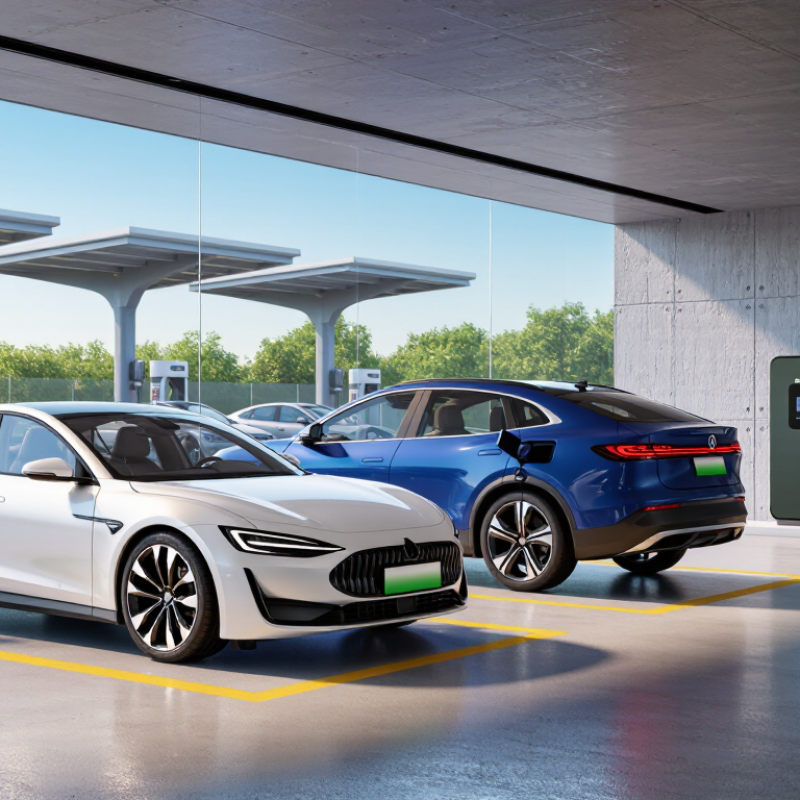
How Electric Vehicle Charging Works
How Electric Vehicle Charging Works
An EV charging session begins when the car and charging equipment communicate. They confirm a safe connection and agree on the power the vehicle can accept. With AC charging, the car’s onboard charger converts grid electricity into the DC power stored in its battery. With DC fast charging, conversion happens in the charging station, allowing power to reach the battery directly. The battery management system monitors conditions such as temperature and charge level. Charging is not a steady-speed process. Power often slows as the battery fills, so the final portion may take longer than drivers expect.
Charging speed depends on the station, the vehicle’s maximum charging rate, battery temperature, and current charge level. A high-power station cannot make every car charge at its rated peak. The International Energy Agency’s Global EV Outlook 2024 reports that public charging points worldwide exceeded four million in 2023, growing about 40% from the previous year. More plugs improve access, but their power levels and availability still vary. A displayed charging estimate can also change during a session; that can be frustrating, but it reflects changing battery conditions.
Tips: Check your vehicle’s manual for its AC and DC charging limits. For regular home charging, an overnight routine may be more useful than chasing maximum speed. In cold weather, use battery preconditioning if your vehicle supports it. Small detail, real difference.
Charging Levels, Power Ratings, and Connector Standards
EV charging levels describe power delivery, not a guaranteed charging speed.
The U.S. Department of Energy’s Alternative Fuels Data Center lists Level 1 at about 1.2 kW, Level 2 at roughly 3.3–19.2 kW, and DC fast charging from around 50 kW. Actual speed also depends on the vehicle’s onboard charger, battery temperature, and state of charge. A 19.2 kW wall unit cannot make every car accept power at that rate. That distinction is easy to miss.
Connector standards vary by region and charging type. In North America, J1772 is widely used for AC charging, while CCS and SAE J3400 support DC fast charging on compatible vehicles. Type 2 and CCS2 are common in many other markets; GB/T is used in China. The International Energy Agency’s Global EV Outlook 2024 reports that public charging points worldwide exceeded four million in 2023, growing by about 40 percent in one year. More chargers mean more options, but connector compatibility still matters at the curb.
Tips: Check your vehicle’s maximum AC and DC input ratings before buying equipment. Match the plug standard, too. If you mostly charge overnight, Level 2 may be enough; a high-power unit can be an expensive mismatch. Confirm installation capacity with a qualified electrician. I’d recheck regional standards before ordering, since connector availability keeps changing.
Ten Types of EV Chargers Buyers Should Know
EV chargers fall into ten useful types, though some categories overlap. A portable Level 1 unit plugs into a household outlet and adds range slowly. It suits low daily mileage. A portable Level 2 unit needs a suitable higher-power outlet and charges faster. A wall-mounted Level 2 charger is a common home choice, while a pedestal model works in driveways or shared parking areas. Public AC chargers also use the vehicle’s onboard charger, so charging speed varies by car.
Destination AC chargers serve places where drivers park for hours, such as hotels. Workplace AC chargers offer similar slower charging during a shift. DC fast chargers convert power inside the station, helping drivers recharge during shorter stops. High-power DC chargers can deliver more, but only when the vehicle and site support it. Bidirectional chargers can send energy back to a home or grid-compatible system. That needs compatible equipment.
The categories blur a little. That can be confusing. Match the charger to your parking routine, vehicle limits, and available electrical supply. A short cable may not reach comfortably across a garage, and a cold morning can slow charging. Check the vehicle manual and charger specifications before buying. A bigger number on a label does not guarantee a faster session.
Comparing Charger Speed, Compatibility, and Installation Needs
Charging speed depends on both the charger and the car’s onboard equipment. The U.S. Department of Energy’s Alternative Fuels Data Center estimates Level 1 charging adds about 2–5 miles of range per hour, while Level 2 adds roughly 10–20. That makes a standard household outlet useful for low daily mileage, but slow after a nearly empty commute. Level 2 units need a suitable 240-volt circuit; installation may require an electrician to check panel capacity. Convenient, but not always simple.
DC fast charging can replenish many compatible vehicles to about 80% in 20 minutes to an hour, according to the same resource. Battery size, temperature, and the vehicle’s maximum charging rate affect the actual stop. The International Energy Agency’s Global EV Outlook 2024 reports that public fast-charger numbers grew by about 55% worldwide in 2023. More options are appearing. Yet connector compatibility still varies by vehicle and region, so check the car’s inlet and manual before buying or planning a route. Check the inlet. For home charging, measure the cable’s path to the parking spot and confirm weather exposure, mounting, and electrical capacity. A charger that looks fast on paper may be a poor fit for an older panel or a distant parking space.